If you want to be taken seriously as a model, there is one piece of marketing you cannot skip: the comp card. Agencies flip through hundreds of them. Casting directors spread them across a table and make yes-or-no decisions in seconds. A great comp card gets you in the room; a weak one gets filed in the trash, no matter how good you actually look in person.
This guide covers everything: what a model comp card is, the exact size and specs agencies expect, which photos you need, how to make one, what it costs, and the mistakes that quietly disqualify new models. By the end, you will know exactly what to shoot and how to put it together.
What Is a Model Comp Card?
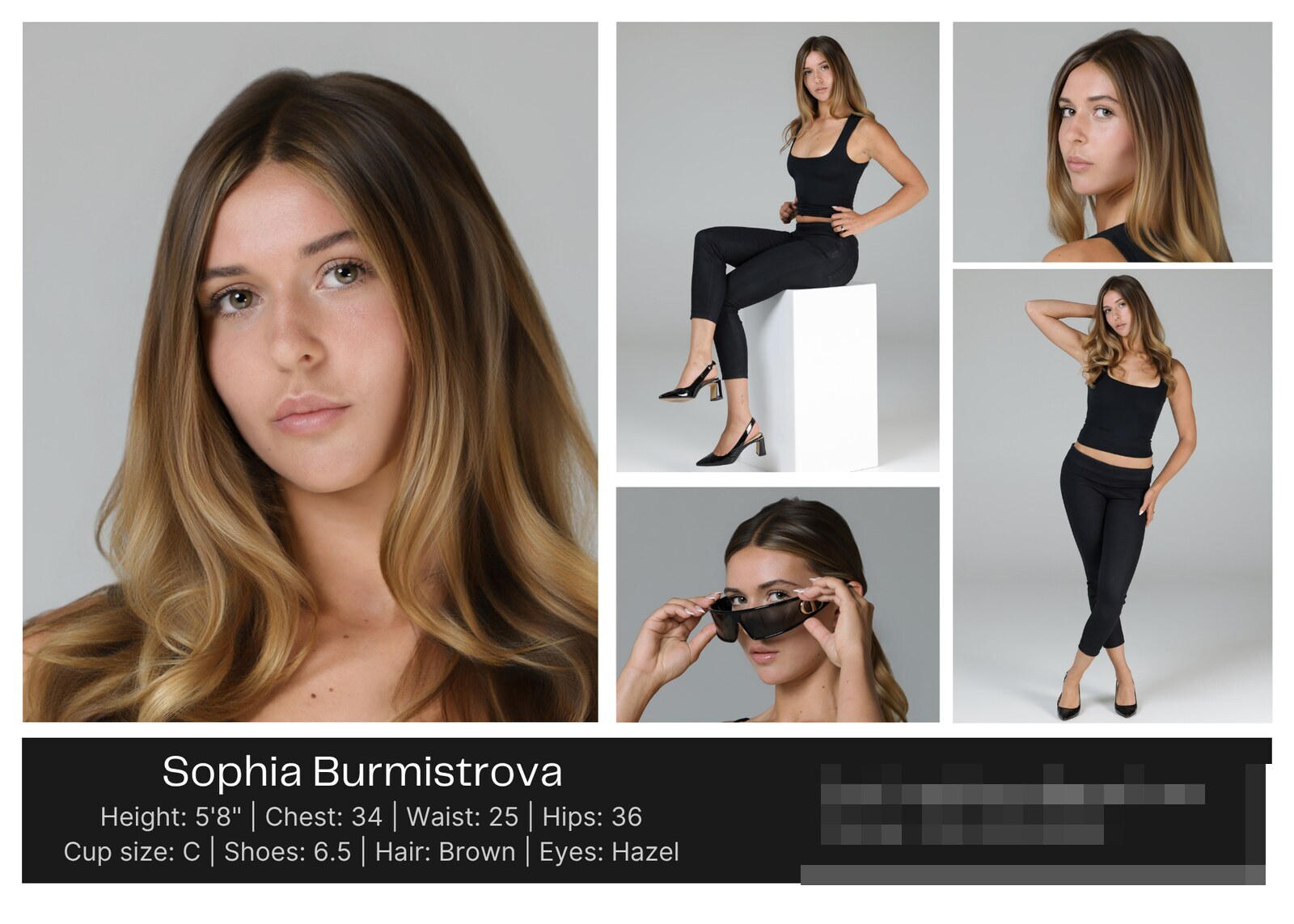
A comp card, short for composite card, and also called a zed card, z card, or sed card, is a printed card that works as a model’s business card and mini portfolio in one. One side features your strongest headshot with your name; the other side carries four to five additional photos plus your stats: height, measurements, shoe size, hair and eye color, and your contact or agency details.
Think of it as your modeling resume, except nobody reads a resume in this industry, they look. A comp card lets an agent or casting director understand your look, your range, and whether you fit their brief in under ten seconds. That is the entire job of the card: instant recognition and an easy way to remember and contact you afterward.
Models hand comp cards out at open calls, castings, go-sees, and networking events. Agencies also keep them on file and send them to clients when pitching models for jobs. Even in an increasingly digital industry, the printed card remains standard at in-person events, and the digital version of the same layout is what gets emailed to clients.
What Goes on a Comp Card
The format is remarkably consistent across the industry, and that consistency is the point, casting directors want to compare apples to apples. Here is the standard layout:
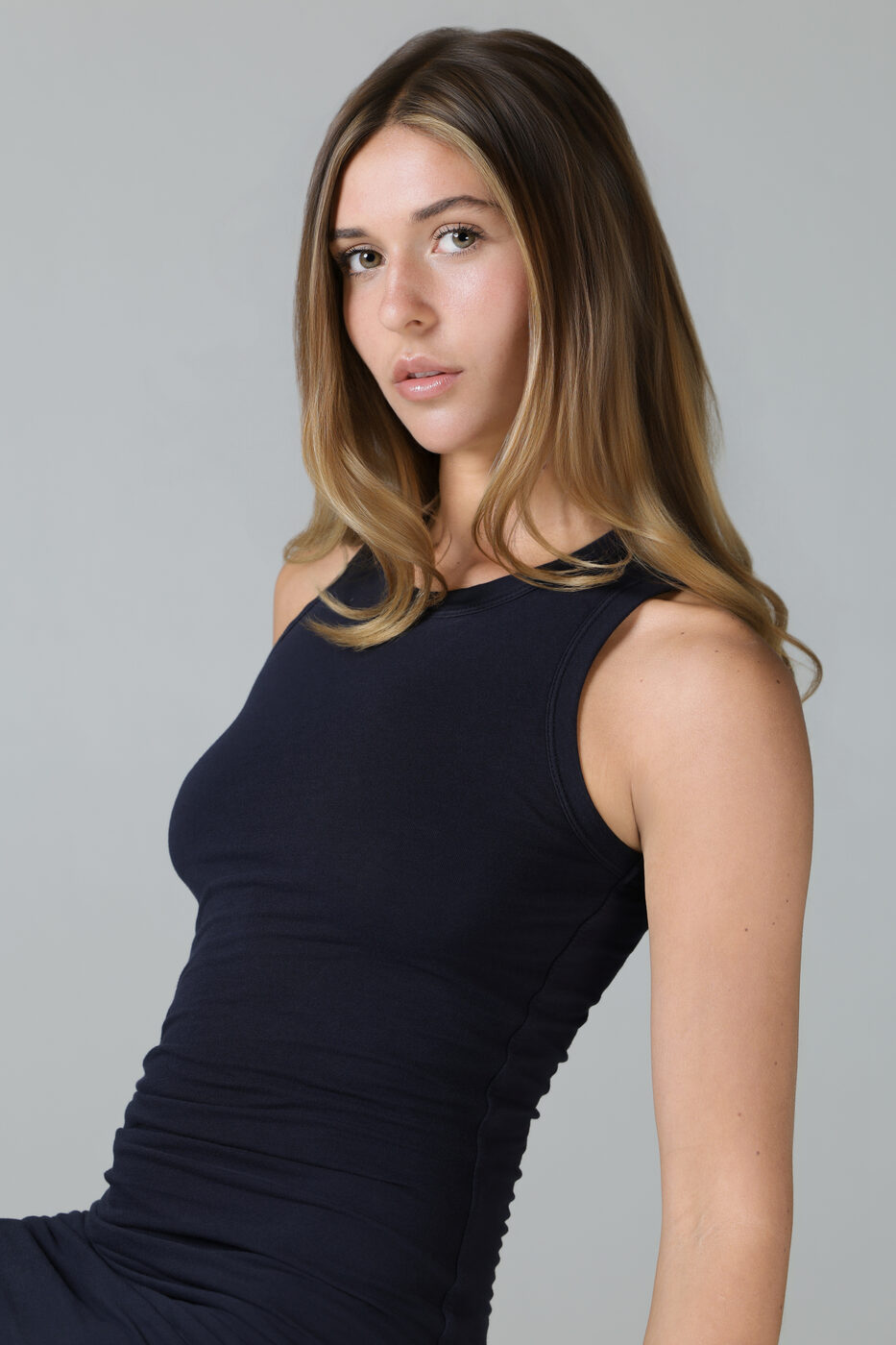
Front: One strong, clean headshot, typically with minimal or no makeup, even lighting, and a neutral background, plus your first and last name. This is the image doing the heavy lifting, because it is the one facing up when cards are spread on a table.
Back: Four to five images showing range, plus your stats block:
- For women: height, bust, waist, hips, dress size, shoe size, hair color, eye color
- For men: height, chest or suit size, waist, inseam, shoe size, hair color, eye color
- Contact: your agency’s details if you are signed, or your professional email and modeling-only social handles if you are freelance
Accuracy matters more than flattery. If your card says 5’10” and you walk in at 5’8″, you have burned the client’s time and your own credibility. Stats get checked.
Comp Card Size and Specs
The industry standard comp card size is 5.5 x 8.5 inches, half of a standard letter sheet, in the A5 family. Cards are printed double-sided on sturdy cardstock, usually 14pt to 16pt, so they survive being handled, stacked, and filed. Vertical or horizontal orientation is your choice; vertical is more common.
Resist the urge to stand out with a nonstandard size. Agencies file and compare cards in standard formats, and an oversized or oddly shaped card is more likely to be an annoyance than a differentiator. Save the creativity for the photos.
A few technical printing notes worth knowing: export your design at 300 DPI, include bleed (typically 0.125″) so images run to the edge cleanly, and choose a matte or satin finish, heavy gloss can glare under office lighting and shows fingerprints.
The Photos: What Your Comp Card Actually Needs
Photos make or break the card, and “my best five pictures” is not the assignment. The assignment is five photos that together prove your range. A standard, agency-friendly set looks like this:
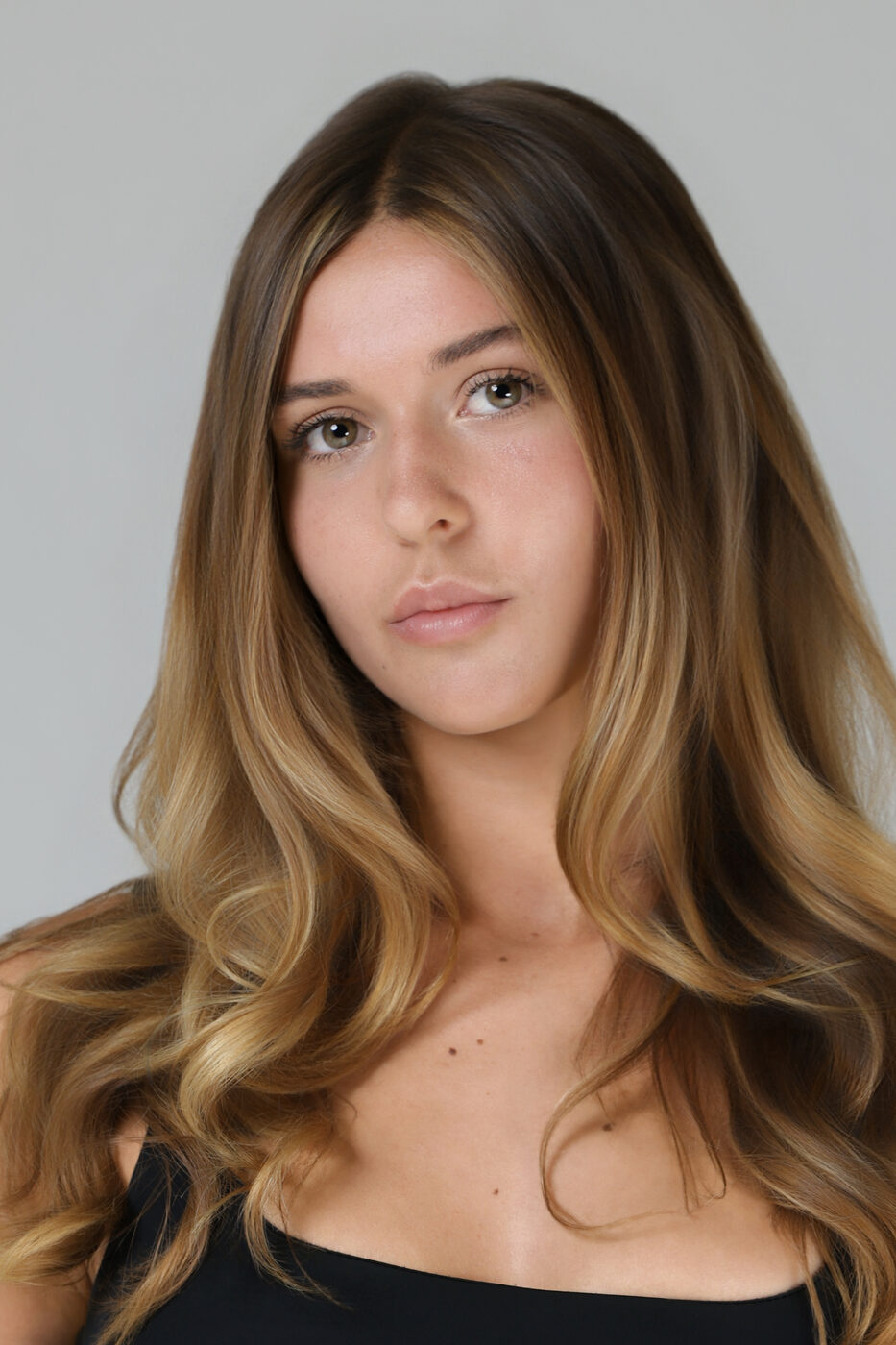
- The clean headshot (front of card). Minimal makeup, neutral expression or soft smile, even studio lighting, plain background. Agencies want to see the real canvas.
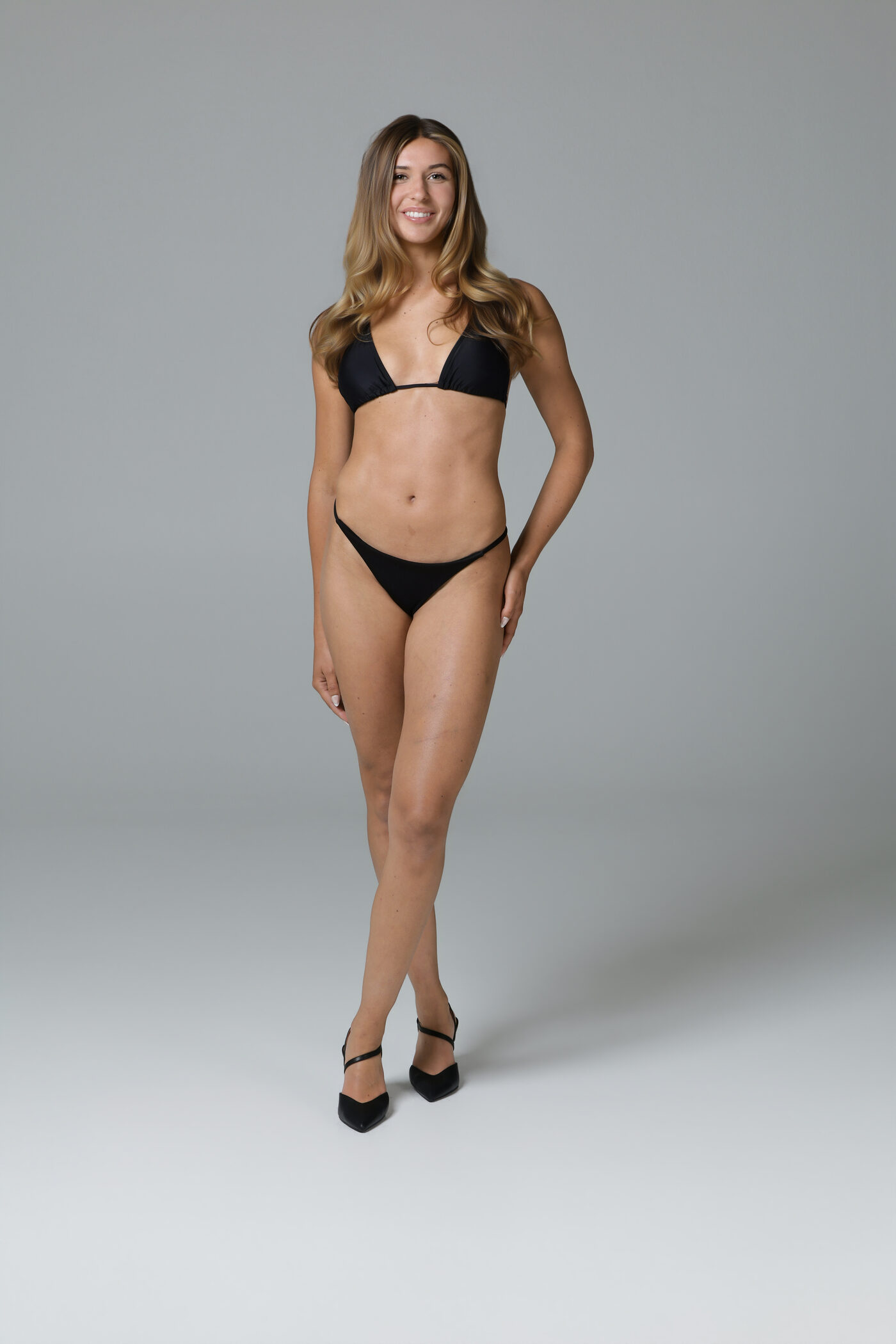
- A full-length body shot. Simple, form-fitting clothing that shows your proportions honestly. This is a working document, not a fashion editorial.
- A commercial shot. Warm, approachable, smiling, the version of you that sells products, appears in lifestyle campaigns, and books the bulk of paid work in most markets.
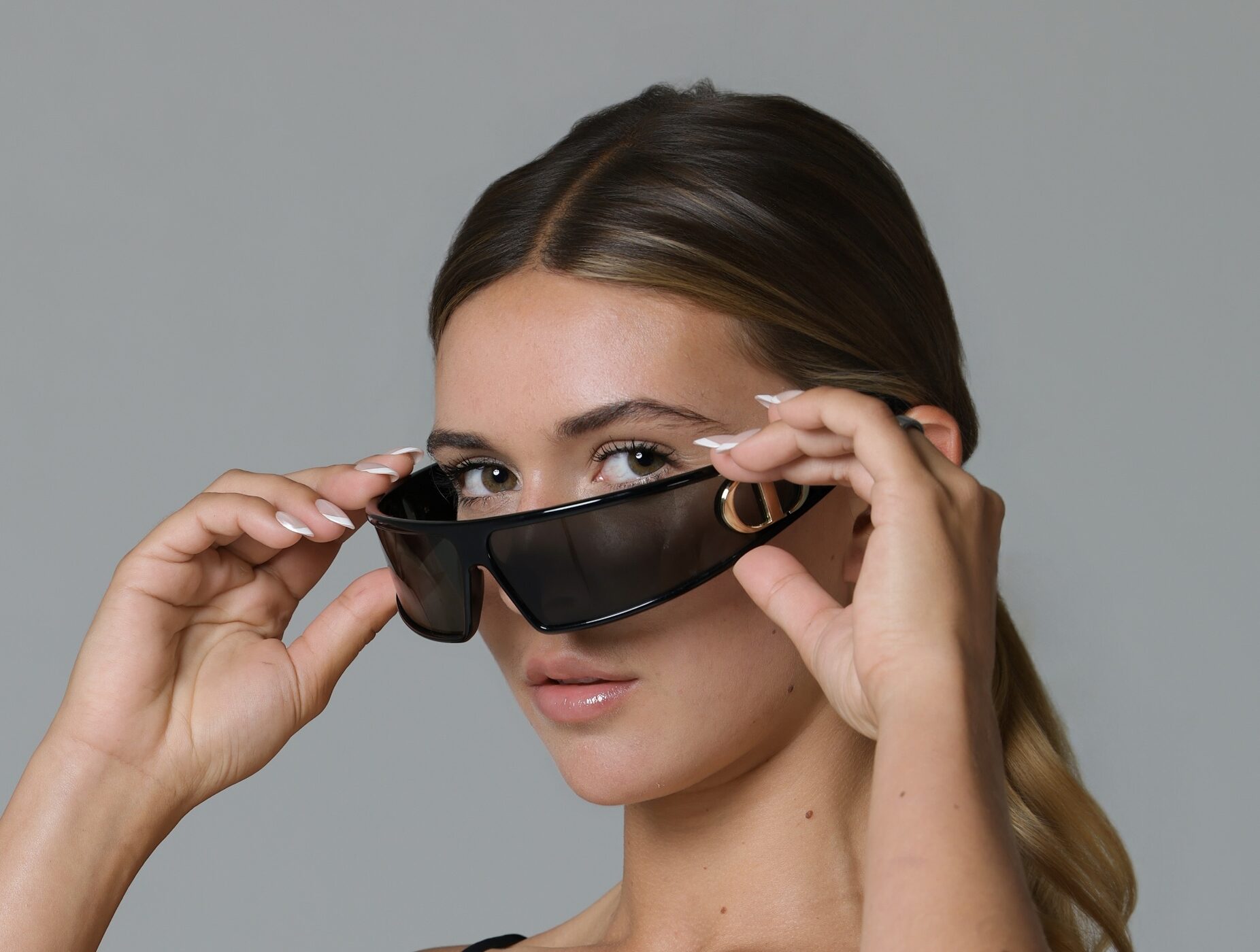
- An editorial or styled shot. Stronger styling, more dramatic lighting or wardrobe, proof you can carry a concept.
- A personality or movement shot. Something with energy: motion, laughter, attitude. It gives casting directors a sense of who shows up on set.
If you specialize, fitness, swim, runway, plus, petite, tailor the mix toward the work you want, and consider a second card version for specific casting types.
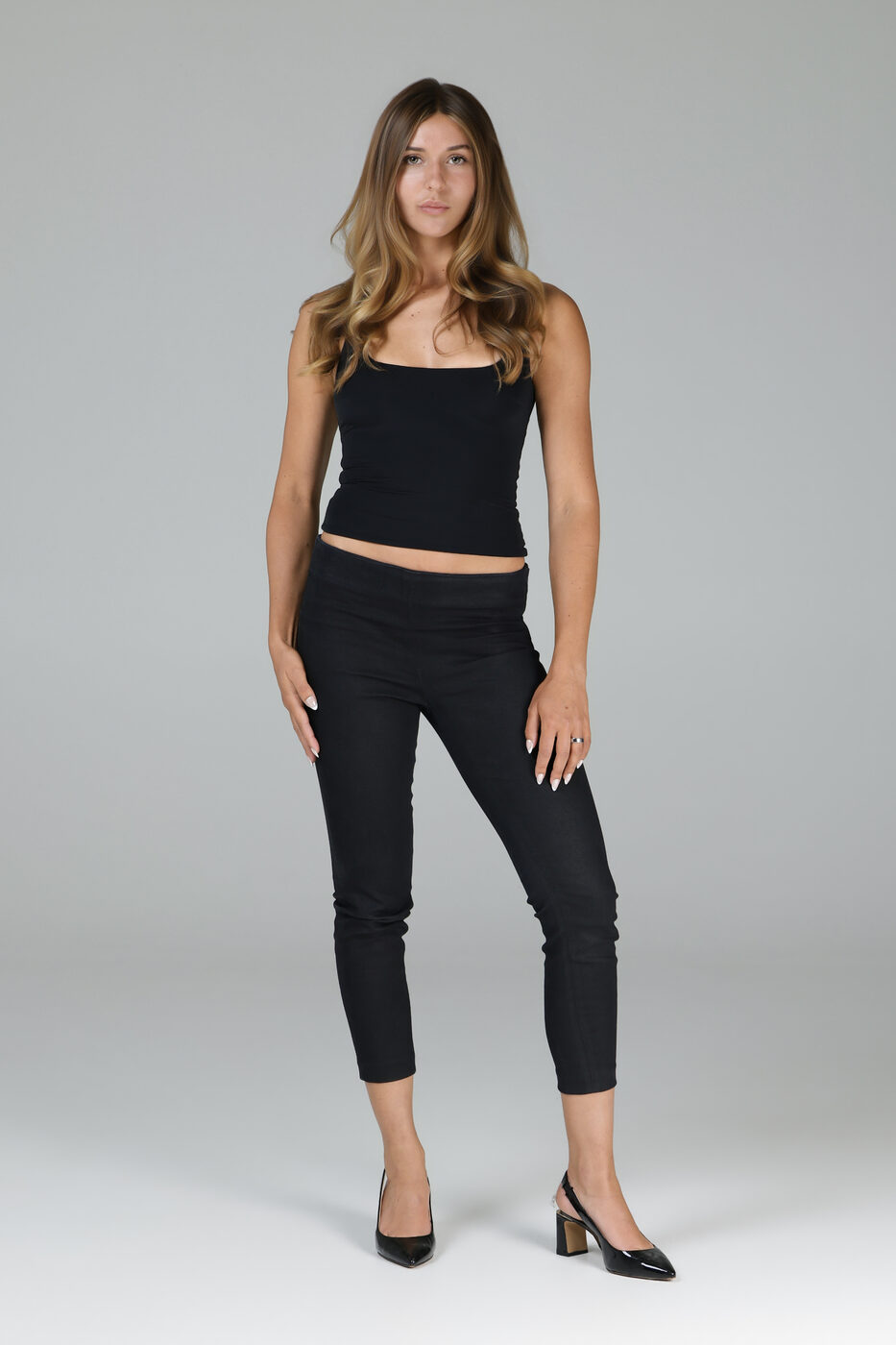
The full-length
The commercial look
The editorial look
The personality shot
Why Comp Card Photos Are Shot in a Studio
You will notice that nearly every strong comp card is built on studio photography, and there is a practical reason. A studio gives you controlled, repeatable lighting, so your skin tone, hair color, and proportions read accurately, which is exactly what agencies are checking. Seamless backdrops keep the focus on you rather than the location. And shooting multiple looks in one session is dramatically easier when the wardrobe changes happen in a dressing room ten feet from set, not in the back seat of a car between locations.
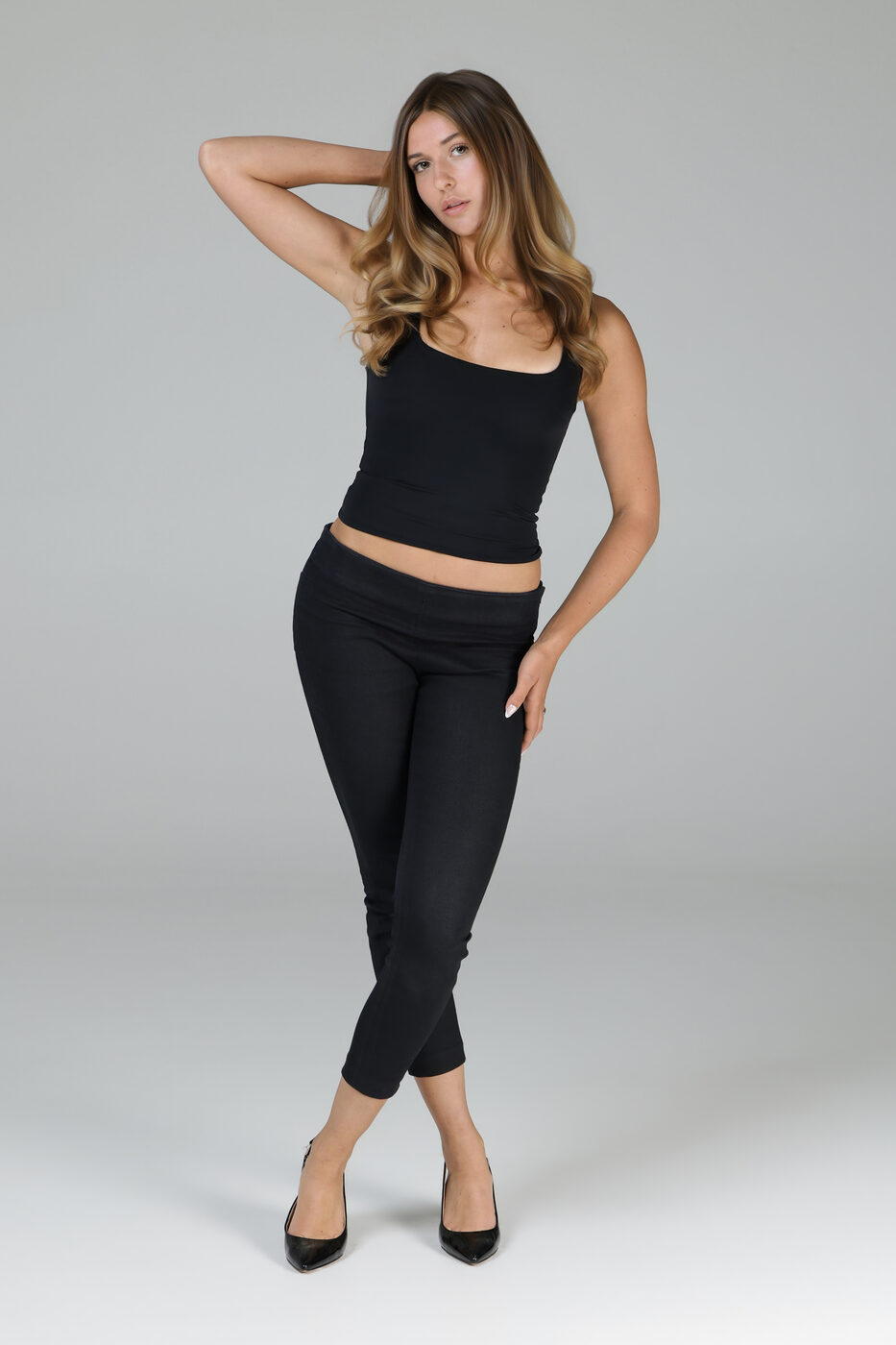
A well-planned two-hour studio session can produce every image a comp card needs: headshot on a white seamless, full-length on gray, a commercial setup, and an editorial look with modified lighting. That efficiency is why photographers price comp card packages around studio time.
How to Make a Comp Card, Step by Step
1. Study the market you want. Pull up the model boards of agencies you would love to sign with and look at their models’ cards. Match the tone, a commercial talent agency and a high-fashion board have very different tastes.
2. Plan your five looks before the shoot. Write a shot list. Pick wardrobe for each: clean basics for the headshot, fitted neutrals for the body shot, brand-friendly casual for commercial, one styled concept for editorial.
3. Shoot with a photographer who knows comp cards. This is not the place for a friend with a nice camera. You need someone who understands agency expectations, accurate color, honest lensing, correct crops, and a studio where looks can change fast.
4. Select ruthlessly. Five images, each doing a different job. Two similar photos means one wasted slot. Get an outside opinion, photographers and agents choose differently than friends and family do.
5. Design the card. Keep it clean: photos large, white space respected, a simple legible font for your name and stats. Tools like Canva and Adobe InDesign have comp card templates at the correct 5.5 x 8.5 size, or your photographer or a designer can lay it out for you.
6. Proof, test print, then print a run. Check every stat twice, print one sample to confirm color and crop, then order, most models start with 50 to 100 cards.
What Does a Comp Card Cost?
Budget in three parts, and here is what it looks like with real numbers. The photoshoot is the main investment. At dk3studios, our modeling photography session is $395 and includes a two-hour studio session, a full lighting setup, and 10 edited images, which covers every shot a five-photo comp card needs with room to spare. Already working with a photographer? Rent the studio from $75/hour on weekdays and $100/hour on weekends instead. Either way, full pricing is here. Design runs from free (do-it-yourself templates) to roughly $50–$150 with a designer. Printing 50–100 cards on quality cardstock generally lands around $50–$150 through printers such as Printique or similar services; many models spend around $100 on the print run alone.
It is tempting to cut costs on photography and spend on printing, that is exactly backwards. A beautifully printed card with weak photos books nothing. Strong photos on a basic template book work.
Digital Comp Cards
Alongside the printed card, you need the same layout as a PDF and a web-ready JPG. Agencies request digital comps for email submissions, and many casting platforms ask you to upload one. The rules are identical, same photos, same stats, same clean layout, just exported for screens. Keep the file size email-friendly (under a few megabytes) and name the file professionally: Firstname-Lastname-Comp-Card.pdf, not final_final_v3.pdf.
Common Comp Card Mistakes
- Over-retouched photos. If you do not look like your card in person, the card has failed. Agencies expect light, honest retouching only.
- Outdated images. New haircut, color change, or noticeable physique change means new photos. Update your card at least yearly, or immediately after any significant change in your look.
- Five versions of the same photo. Range is the whole point. Different looks, different energy, different crops.
- Fudged stats. They get verified. Nothing ends a casting faster.
- Cluttered design. Borders, script fonts, collages, and logos compete with your face. Ruthless simplicity wins.
- Phone snapshots and selfies. Agencies can tell instantly, and it signals you are not ready to invest in your own career.
How Often Should You Update Your Comp Card?
Treat your comp card as a living document. Refresh it once a year at minimum, and sooner if your look changes, you land stronger tearsheets, or you shift markets, say, from commercial into fitness. Working models often refresh seasonally, since clients want to see current work and a current you. When you update, replace the weakest image first; your card should only ever get stronger.
Shooting Your Comp Card in San Diego
If you are building or refreshing a comp card in Southern California, dk3studios shoots comp card sets in our 1,200 sq ft San Diego studio, professional cyc wall, seamless backdrops in multiple colors, controlled lighting, and a private dressing room so you can move through all five looks in a single session. Our team photographs model portfolios and professional portraits year-round, and works with new faces as often as signed models. You can also rent the studio by the hour from $75/hr and bring your own photographer.
Have a look at our pricing, or get in touch, tell us the looks you need and we will plan the session around your card.
Model Comp Card FAQ
What size is a model comp card?
The industry standard is 5.5 x 8.5 inches (A5 family), printed double-sided on 14–16pt cardstock. Vertical or horizontal both work; check any specific agency guidelines before printing.
How many photos go on a comp card?
Five is typical: one headshot on the front and four images on the back showing range, full-length, commercial, editorial, and a personality or movement shot.
Do I need an agency to have a comp card?
No. Freelance models use comp cards with their own contact details. If you sign with an agency later, they will typically re-issue your card with their branding and preferred images.
Comp card vs. headshot, what’s the difference?
A headshot is a single image; a comp card is a multi-image marketing piece with your stats. Actors lead with headshots; models lead with comp cards.
Can I make a comp card for free?
The design, yes, free templates exist in Canva and similar tools at the correct size. The photography is where investment matters, because the images are what agencies are actually evaluating.